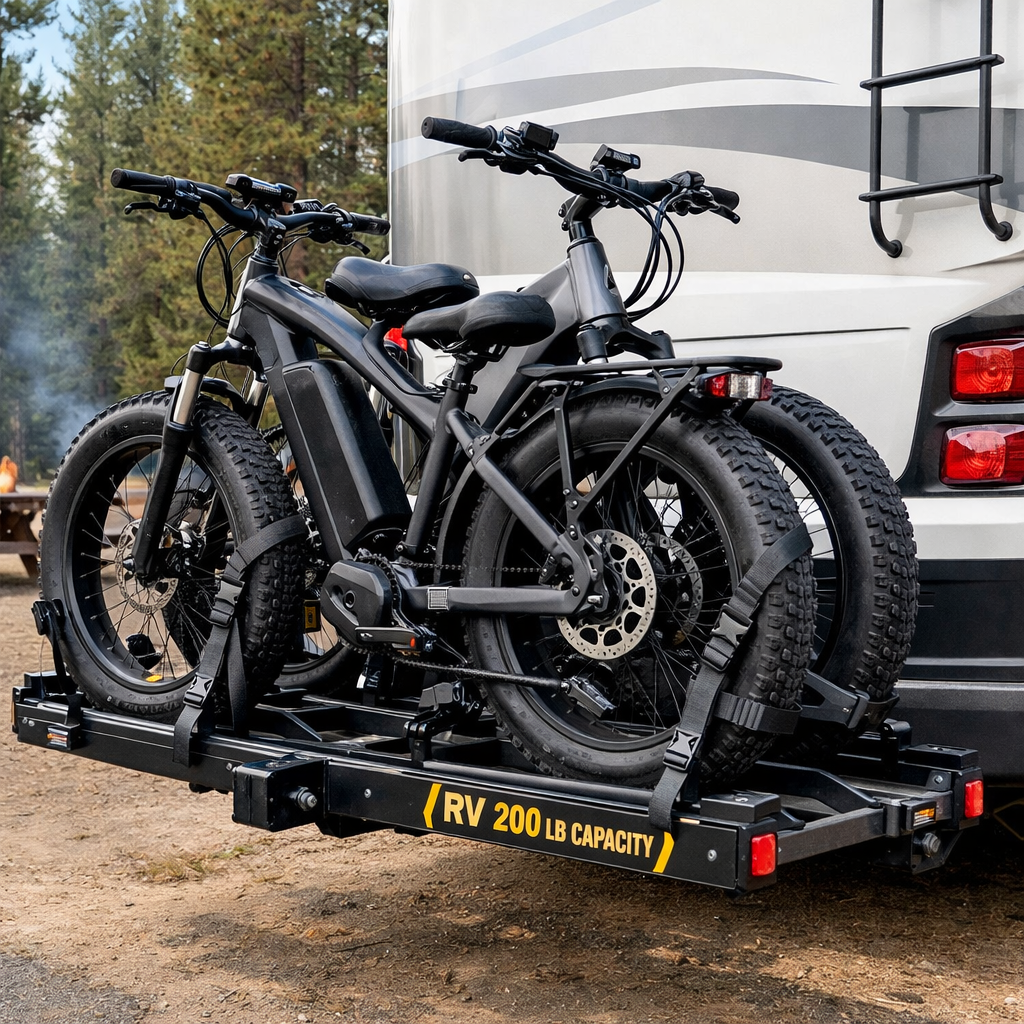
Safe, RV-Rated Heavy E-Bike Hitch Carriers From Trusted Retailers
RVers ask us two things most: who sells affordable e‑bike hitch mounts rated 60+ lb per bike, and which RV‑rated wheel‑clamp platform racks fit 2‑inch receivers. The short answer: look to proven, RV‑approved tray racks from Hollywood Racks (RV Rider), Yakima (StageTwo, OnRamp LX), Saris (Edge) for the best value, and Kuat (Piston ION) or 1Up USA (Super Duty) for premium 100‑lb headroom. This guide cuts straight to safe, RV‑rated choices, retailer strategies, and fitment checklists—so you match per‑tray capacity, ramps, and anti‑wobble hardware to your motorhome or tow vehicle. If you’re new to RV bike hauling, start with our safety-first fit and loading steps below, then choose a rack that’s explicitly RV‑approved and fits your 2‑inch receiver with room to spare. For broader RV gear advice and our detailed checklists, see RV Critic.
What RV-rated means for heavy e-bike carriers
An RV‑rated hitch rack is explicitly approved by its maker for motorhomes, camper vans, or travel trailers, often with a lower per‑bike rating than on passenger cars. The RV rating accounts for extra leverage from long rear overhangs, stiffer suspensions, and higher vibration on rough roads.
Because of those forces, many racks publish different weight limits and compatibility when installed on RVs or trailers, including restrictions on extensions and adapters (as noted in Bikerumor’s 2024 hitch-rack guide). Premium racks increasingly advertise higher capacities and off‑road or RV suitability, including the 1Up USA Super Duty (100 lb per bike) and Kuat’s Piston ION 2 (100 lb per bike), highlighted in Mtn Weekly’s e‑bike rack roundup. RV Critic treats a manufacturer’s explicit RV approval as the baseline for safe use.
Top RV‑rated, 2‑inch wheel‑clamp platforms at a glance:
- Safe for 60–100 lb e‑bikes when RV‑approved
- Prefer tray platforms that clamp wheels (not frames)—RV Critic’s default for heavy e‑bikes
- Look for anti‑wobble and ramp support to reduce lifting
Quick comparison: RV-rated e-bike hitch platforms for 2-inch receivers
| Model (2" receiver) | Per-tray capacity (RV context) | RV rating / derating notes | Ramp availability | Rack weight (approx) | Warranty | MSRP (approx) |
|---|---|---|---|---|---|---|
| 1Up USA Super Duty | 100 lb | Off‑road/RV suitability per maker guidance; verify add‑ons/expansions | No integrated; accessory options vary | ≈45–60 lb (build‑dependent) | Rebuildable design; see brand policy | $700–$1,100+ (build‑dependent) |
| Kuat Piston ION 2 | 100 lb | RV/off‑road positioning noted; confirm RV approval for your rig | No integrated | ≈60+ lb | Limited lifetime (brand policy) | ~$900–$1,100 |
| Yakima StageTwo | 70 lb | Check RV use notes and limits | RampUp accessory ($119) | ≈66 lb | Limited lifetime (brand policy) | ~$700–$850 |
| Yakima OnRamp LX (2") | 80 lb | RV notes vary by application; verify | Integrated ramp | 53.5 lb | Limited lifetime (brand policy) | ~$800–$950 |
| Saris Edge | 80 lb | Confirm RV approval and any derating | No integrated | ~67 lb | Lifetime warranty | ~$800–$1,000 |
| Hollywood Racks RV Rider | 80 lb | Designed specifically for RV applications | Optional ramp on select SKUs | ≈50–60 lb | Limited lifetime (brand policy) | ~$600–$750 |
| Thule T2 Pro XTR 2 | ~60 lb (model‑specific) | Confirm RV approval; often derated on RVs | No integrated | ≈50+ lb | Limited lifetime (brand policy) | ~$800–$1,000 |
Notes:
- Per‑tray capacities are published maxima; always confirm the rack’s RV‑specific approval and limits for your vehicle.
- Rack weights and MSRPs vary by configuration and model year; verify current specs with the brand or retailer.
How to match rack capacity to your heaviest e-bike
Per‑tray capacity is the maximum weight each individual bike position can support, while total capacity is the combined maximum across all trays. For RV use, size with 10–20 lb of extra margin above your heaviest e‑bike to cover accessories, tool kits, and any RV derating.
Context for common capacities:
- Saris Edge: 80 lb per tray, 160 lb total for two bikes, with tool‑free anti‑wobble and locks, plus a lifetime warranty (reported by a Yahoo reviewer who tested seven heavy e‑bike racks).
- Yakima StageTwo: 70 lb per bike, with an optional RampUp loading ramp accessory.
- Hollywood Racks RV Rider: 80 lb per tray (160 lb total), purpose‑built for RV applications, as noted by Electric Bike Report.
RV Critic’s three-step sizing flow:
- Weigh your heaviest e‑bike without the battery (and note tire size).
- Confirm the rack’s RV rating and any RV‑specific weight limits (don’t assume car ratings apply).
- Verify your hitch receiver size and tongue weight rating exceed the combined rack + bike load.
Hitch requirements for safe RV use
Heavy e‑bike racks generally require a 2‑inch receiver for strength and a broader anti‑wobble interface. Bicycling’s testing underscores that higher‑capacity platforms and stout anti‑wobble systems pair best with 2‑inch receivers for heavy bikes and rougher roads.
Hitch classes in brief: Class II hitches use 1.25‑inch receivers for lighter loads. Class III/IV use 2‑inch receivers and higher tongue‑weight ratings, preferred for heavy e‑bikes and RV duty. Always confirm your vehicle’s tongue‑weight rating before adding a loaded rack.
For extreme payloads, prioritize robust, chassis‑mounted designs and stout wheel‑clamp trays (Kuat’s Piston ION lineup and other premium builds emphasize off‑road/RV use in independent roundups). RV Critic quick‑fit checklist:
- Receiver: 2-inch, Class III/IV
- Tongue weight: rack + bikes + margin ≤ rated limit
- Clearance: account for ladders, spare tires, and rear doors
- Hitch pin: confirm pin size and integrated anti‑wobble compatibility
Wheel-clamp platforms vs hanging racks
RV Critic favors wheel‑clamp platform trays for heavy e‑bikes. They avoid frame contact, protect finishes, and simplify securement—an approach championed across premium platforms and noted in head‑to‑head testing of e‑bike‑ready racks. Wirecutter likewise favors tray‑style wheel‑clamp racks for heavy e‑bikes over hanging designs because they’re easier to load and more stable at speed. For 60–100 lb bikes, prioritize:
- Wheel‑only clamping
- Tilt/tilt‑away access to doors
- Integrated or accessory ramps for roll‑up loading
Trusted retailers with RV-rated, 60 lb-plus e-bike carriers
Shop established brands and specialty retailers that clearly publish RV approvals, parts availability, and support. Features to prioritize include integrated anti‑wobble, frame‑free wheel clamping, locks for bikes and hitch, ramps, and solid warranties. Retailers often spotlight tool‑free anti‑wobble systems and useful add‑ons like Yakima’s RampUp ramp ($119, called out in Bikerumor’s 2024 guide).
What to compare before you buy:
- Inventory and ship speed (in‑stock today vs. back‑order)
- Price matching and member perks (e.g., installation credits)
- Return windows and damaged‑in‑transit handling
- Parts support (locks, trays, straps) and warranty help
Start with RV Critic’s buying checklists, then consider common sources our readers use: brand‑direct (1Up USA, Kuat, Yakima, Thule, Saris, Hollywood Racks), national outfitters (REI Co‑op, Rack Attack), and RV‑centric dealers (etrailer, local RV service centers).
1Up USA
1Up is the go‑to for rebuildable construction and extreme per‑bike capacity. The Super Duty system claims a 100 lb per‑bike rating and is positioned for rough/off‑road use in enthusiast testing. Its corrosion‑resistant aluminum build, serviceable hardware, and replaceable parts make it a strong long‑term RV ownership choice. Confirm 1Up’s RV usage guidance for your configuration and consider any anti‑wobble enhancements the brand offers.
Kuat
Kuat emphasizes premium ergonomics, wheel‑first clamping, and sleek user interfaces.
- Piston ION 2: rated up to 100 lb per tray with RV/off‑road positioning noted in independent roundups; built around a stout 2‑inch platform.
- Piston Pro X: carries e‑bikes around the high‑60‑lb range per bike and accepts up to 5‑inch tires. Because hitch racks occasionally face industry recalls, always check current recall status before buying (Wirecutter has tracked examples, including a June 2024 notice on a different Kuat model).
Yakima
Yakima delivers midrange value with strong capacities and smart ramps.
- StageTwo: 70 lb per bike with the RampUp roll‑on accessory highlighted in Bikerumor’s guide.
- OnRamp LX (2-inch): 80 lb per tray, 160 lb total, about 53.5 lb rack weight, and an integrated ramp, as covered by Electric Bike Report. Check RV approval, tire size compatibility, tilt/tilt‑away access, and lock integration in the product specs.
Thule
Thule targets buyers who want refined features and integrated locks. The T2 Pro XTR 2 offers solid capacity and built‑in security, but RV approval and derating vary by model—verify in Thule’s specs. If ramps are a must, compare Thule’s options against Yakima’s dedicated ramp systems and Saris’s loading conveniences.
Saris
Saris blends high per‑tray capacity with value‑forward convenience. The Saris Edge supports 80 lb per tray (160 lb total), weighs roughly 67 lb, offers one‑handed loading, tool‑free anti‑wobble, and integrated cable and hitch‑pin locks—and backs it with a lifetime warranty (documented in a Yahoo hands‑on review). For solo users, plan your loading routine due to the rack’s heft, and confirm RV approval in Saris’s literature.
Hollywood Racks
For RV‑targeted value, the Hollywood Racks RV Rider is a frequent pick. It’s rated 80 lb per tray (160 lb total) and designed for RV applications (as noted by Electric Bike Report). Review fat‑tire support, security features, and spare‑tire clearance as applicable, and check whether a ramp is bundled or optional on the specific SKU you’re considering.
Specialty RV dealers and fitment support
For complex setups—rear ladders, towed vehicles, long rear overhangs—lean on RV‑focused dealers. Ask for:
- RV‑specific derating guidance and test‑fit services
- Lighting or auxiliary plate mounts if trays or bikes obscure tail lamps; several rack ecosystems support wiring‑ready add‑ons and light bars (discussed in Bikerumor’s guide)
What to bring to your appointment (along with RV Critic’s fit checklist):
- Bike weights (without batteries) and tire sizes
- Receiver class/size and tongue‑weight rating
- Motorhome year, length, rear overhang, and any towed‑vehicle details
Pricing tiers and value picks
Here’s how features scale as you spend more:
- Budget/value (RV‑rated, 60–80 lb per tray): Hollywood Racks RV Rider. You get RV‑specific approval, stout trays, and basic security; ramps may be optional.
- Midrange (70–80 lb per tray): Yakima StageTwo; Yakima OnRamp LX with integrated ramp. Expect smoother tilt mechanisms, integrated locks, and cleaner anti‑wobble systems.
- Premium (67–100 lb per tray): Kuat Piston ION/Pro X; 1Up Super Duty. You gain higher capacities, refined ergonomics, serviceable parts, and durable finishes.
Value snapshot (features vary by SKU; verify before purchase):
| Tier | Example models | Per-tray capacity | Locks included | Ramp status | Warranty emphasis |
|---|---|---|---|---|---|
| Budget/value | Hollywood Racks RV Rider | 80 lb | Yes (varies by kit) | Optional on select SKUs | Limited lifetime (brand policy) |
| Midrange | Yakima StageTwo; OnRamp LX | 70–80 lb | Yes | StageTwo: accessory; OnRamp LX: integrated | Limited lifetime (brand policy) |
| Premium | Kuat Piston ION/Pro X; 1Up Super Duty | ~67–100 lb | Yes | Usually accessory/none integrated | Long‑term support; rebuildable (1Up) |
Best value for 60–80 lb e‑bikes: OnRamp LX if you need a built‑in ramp; RV Rider if you want RV‑specific approval at a lower price; Saris Edge if you want tool‑free anti‑wobble and a lifetime warranty.
Loading ramps, tilt access, and anti-wobble hardware
Ramps and tilt functions turn 60–100 lb e‑bikes from a strain into a safe roll‑on task, while robust anti‑wobble systems keep the rack rock‑solid. Several heavy‑duty racks include or support ramps; Yakima’s RampUp accessory retails around $119, and tool‑free anti‑wobble tightening is a standout convenience on options like the Saris Edge.
RV Critic’s ramp‑loading steps:
- Remove the battery and accessories first.
- Engage the tilt if it lowers the tray angle safely.
- Stabilize the ramp; walk the bike up in a low gear, holding the brake.
- Clamp the wheels before letting go; then secure locks/straps.
- Verify anti‑wobble tension after installation and recheck after a short shakedown drive.
Fit checks for motorhomes, vans, and tow vehicles
Use this RV Critic step‑by‑step checklist before purchasing:
- Confirm RV approval and any derated capacity versus car use.
- Measure rear overhang, hitch height, and departure angle; ensure trays don’t strike on dips/driveways.
- Check ladder, spare‑tire, and bumper interference; note swing‑away or rear‑door clearances on vans.
- If flat‑towing, confirm turning clearance between the rack and tow‑bar hardware.
- Note: vertical racks can show visible bike bounce and are less ideal for heavy e‑bikes on RVs, as observed in GearJunkie’s testing.
Safety checks before every trip
RV Critic recommends a repeatable pre‑trip routine:
- Tighten the hitch pin/anti‑wobble and verify torque
- Inspect wheel clamps, straps, and locks
- Remove e‑bike batteries and secure loose items
- Confirm light/plate visibility; attach auxiliary lighting/plate if obscured
- Recheck anti‑wobble and straps after the first 25–50 miles Skip bike covers at highway speeds—Hollywood Racks warns they add drag and buffeting that can stress racks and bikes.
Warranty, recalls, and parts availability
Buy from reputable retailers and confirm there are no active recalls before mounting bikes. Wirecutter’s reporting on past industry recalls (e.g., Küat Transfer v2 in June 2024) is a good reminder to check serials and bulletins. Favor brands with long warranties and serviceable ecosystems: Saris Edge includes a lifetime warranty per hands‑on reporting, and 1Up’s Super Duty is fully rebuildable with replaceable parts. Before your first trip, record serial numbers, torque specs, and part SKUs (wheel cradles, straps, locks) to speed future maintenance.
Frequently asked questions
What capacity should I choose for 60 to 80 lb e-bikes?
Choose a rack with 10–20 lb of headroom above your heaviest bike and confirm the RV‑specific rating. RV Critic’s sizing checklist helps you right‑size quickly.
Do I need a 2 inch receiver for heavy e-bike racks?
Yes. RV Critic treats 2‑inch receivers as the safe default for heavy e‑bikes on RVs.
Are passenger-vehicle racks safe on RVs?
Only if the manufacturer explicitly RV‑rates the rack. Many are derated on RVs due to extra leverage and vibration; RV Critic advises checking RV approval and specific limits.
Should I use a bike cover on the highway?
No. RV Critic recommends traveling uncovered because covers add drag and buffeting that can strain the rack and bikes.
How do I safely load heavy e-bikes without lifting?
Choose a rack with an integrated or accessory ramp, remove the battery, roll the bike up in control, and clamp the wheels before letting go; tilt‑away features help door access without unloading. See RV Critic’s ramp‑loading steps.