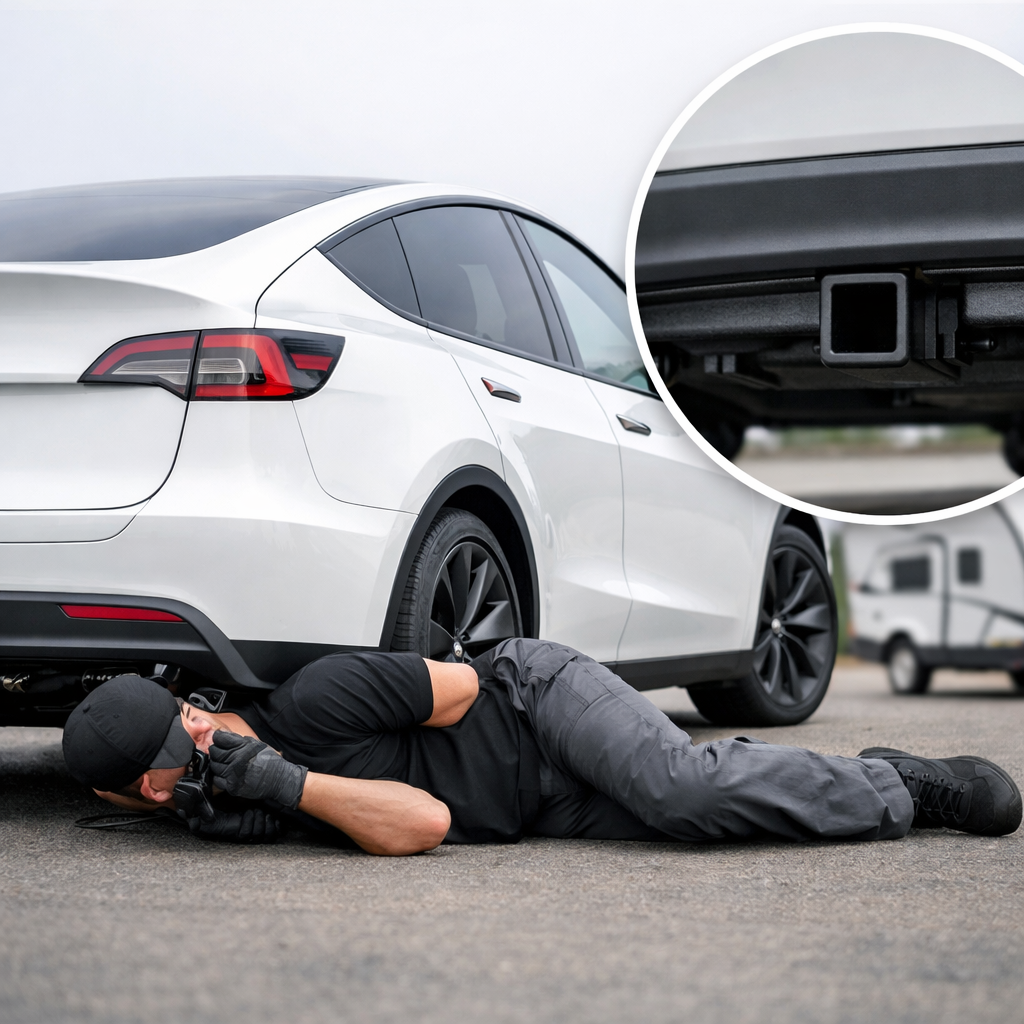
Expert Picks: Best Aftermarket Hidden Hitches for Tesla Model Y
Looking for the best hidden/flush hitch for a 2026 Tesla Model Y aftermarket install? Start with systems engineered to disappear behind the bumper, preserve sensors, and meet safety standards. Our top picks—Stealth Hitches and EcoHitch—deliver a truly concealed hitch Model Y owners can trust for accessory racks or light towing, with strong warranties and proven engineering. Expect premium aftermarket kits to land well below most dealer packages, yet with comparable performance when matched to the vehicle’s limits. Below, we break down top options, how to choose, installation must‑knows, EV towing tips, and a clear budget map so you can pick a hidden receiver hitch with confidence (see the Torklift Central comparison for performance, pricing tiers, and standards). RV Critic prioritizes concealment, safety compliance, and real‑world fitment over flash.
RV Critic Top Pick
For most owners, RV Critic recommends Stealth Hitches as the safest “set it and forget it” choice: it’s fully hidden when stowed, protects ground clearance and sensors, and includes integrated locks and a lifetime-for-owner warranty. EcoHitch is the best value alternative, using a hidden cross‑tube and an upward‑angled receiver for a near‑OEM look with robust, vehicle‑dependent capacities.
Quick spec snapshot for daily use:
- Stealth Hitches: Fully invisible when the receiver is removed; made in the USA; integrated locks; no visible cutting on some applications; built to maintain ground clearance and driver‑assist features.
- EcoHitch: Hidden cross‑tube with upward‑angled receiver; strong corrosion resistance; vehicle‑dependent capacities up to about 5,000 lb towing and 750 lb tongue weight; engineered for a stock‑like appearance.
- Safety baseline: RV Critic requires SAE J684 compliance labeling before you buy.
- Pricing context: Entry aftermarket $150–$300; premium aftermarket $400–$500; dealer factory packages $1,500–$3,000 (Torklift Central comparison).
EcoHitch
EcoHitch is a benchmark concealed design for owners who want OEM‑like aesthetics with stout engineering. Its hidden cross‑tube tucks behind the fascia and an upward‑angled receiver helps preserve departure angle and ground clearance. EcoHitch sits mid‑to‑premium on price and emphasizes durability via robust materials and corrosion resistance. Manufacturer‑stated, vehicle‑dependent capacities reach roughly 5,000 lb towing and 750 lb tongue weight; always obey the lower of the vehicle or hitch rating.
EcoHitch’s development process highlights simulation‑driven engineering to locate and fix stress points before physical testing, contributing to long‑term safety and fitment consistency.
Finite Element Analysis (FEA): A computer-based simulation method that divides complex parts into small elements to predict how they respond to forces, vibration, and heat. In hitch design, FEA helps identify stress concentrations and optimize strength-to-weight before physical testing, improving safety and durability.
Stealth Hitches
Stealth Hitches is the premium, fully hidden alternative that keeps the Model Y looking stock. The receiver and ball mount detach completely, leaving nothing visible under the bumper when not in use. The company highlights made‑in‑USA manufacturing, integrated locks, a lifetime‑for‑owner warranty, and, in some applications, no visible cutting with no loss in ground clearance—key advantages for EV owners focused on sensors, cameras, and aerodynamics (see Stealth Hitches).
Pros
- Invisible when stowed; preserves sensors and cameras
- Robust finish and integrated locks
- Lifetime‑for‑owner warranty; USA‑made
Cons
- Premium pricing
- Installer availability can affect cost and scheduling
Hidden Hitch
Hidden Hitch is a long‑standing brand with wide retail presence and many vehicle‑specific SKUs, signaling breadth rather than a singular “stealth” formula (example coverage spans SKUs such as 87612, 82574, 87593, 60290 on the brand’s retail listings). For a Tesla Y tow hitch aftermarket upgrade, verify the exact SKU’s installation photos to confirm whether it’s truly concealed or a standard exposed receiver (see Hidden Hitch retail listings on Amazon). The upside is broad availability and price flexibility; just confirm Model Y fitment and any trim‑modification requirements before purchase.
Curt
Curt is a mainstream, high‑availability brand frequently cited among the best hitch makers, with extensive distributor support—useful if you prioritize cost, easy sourcing, and installer familiarity (see CarParts QuickRef on top hitch brands). For context on brand capabilities, a Curt Class III like the CURT 13432 carries a 6,000‑lb rating, illustrating the company’s range—even though your vehicle’s limits always control (AutoGuide’s top hitches roundup). For the Model Y, confirm the exact year/trim fitment, whether the chosen SKU is a concealed/flush design, required trimming, potential sensor impact, and compatible wiring kits.
Draw-Tite
Draw‑Tite has strong coverage and value across Class II–IV categories, but hidden designs can vary by SKU. Community feedback underscores the importance of model‑specific vetting—for example, a “hidden” Draw‑Tite 76919 for a different EV was flagged “NOT RECOMMEND” by owners due to install and finish concerns, reinforcing the need to read reviews and instructions before buying (Macheforum user report). For a concealed hitch Model Y setup, scrutinize instructions, photos, finish quality, and whether the receiver is truly hidden post‑install.
How to choose a hidden hitch for Tesla Model Y
Follow this quick, EV‑focused checklist from RV Critic:
- Confirm exact 2026 Model Y fitment in the brand’s database; year‑by‑year changes matter for brackets and fascia clearances (see Big Tex Trailer World’s hitch‑selection guide for fundamentals).
- Require clear SAE J684 compliance marking. This safety standard indicates testing for strength and durability.
- Verify concealment level, ground clearance, and preservation of sensors/hands‑free liftgate via install photos and instructions.
Specs to confirm
- Receiver size: 1.25‑inch vs 2‑inch (2‑inch offers wider accessory compatibility).
- Hitch class and vehicle‑limited ratings (always use the lower rating).
- Whether trimming is required, wiring needs, and installer requirements.
SAE J684: A voluntary safety standard that sets performance, strength, and marking requirements for trailer hitches and towing devices. Hitches meeting SAE J684 undergo testing to validate load capacity and durability, helping ensure safe towing when matched to the vehicle’s limits and proper installation practices.
Installation and wiring considerations
Professional installation is often worth it: it ensures secure mounting, correct wiring, and minimizes the risk of misalignment or sensor interference during a hidden install (see the Uniglass Plus comparison of hidden systems). RV Critic generally favors pro installs for hidden systems. The wrong hitch or improper torque can lead to instability, detachment, or accidents—follow torque specs, then re‑check hardware after initial miles.
Helpful add‑ons
- Adjustable ball mounts to dial in coupler height
- Anti‑rattle hardware for accessory stability
- Hitch locks and covers to protect the receiver and deter theft
Mini flow
- Pre‑check: inventory tools, confirm the correct wiring kit and routing plan.
- Install: remove trim as directed, mount and torque to spec, route wiring clear of sensors.
- Validate: test brake/turn/tail lights; confirm hands‑free liftgate and parking sensors still function.
Safety, load ratings, and EV-specific towing tips
Hitch classes indicate potential capacity, but you must obey the lower of the vehicle or hitch rating—always. Both factory and aftermarket systems should meet or exceed SAE J684; verify markings before purchase. While some aftermarket hitches in heavier classes exceed 10,000 lb, that context doesn’t change your Model Y’s limits.
EV practicality
- Detach receivers and use accessory‑mode racks when possible to reduce aero drag when not towing.
- Keep tongue weight within limits and use anti‑rattle solutions to reduce sway on hitch‑mounted cargo.
- Expect some range loss with trailers or large rear accessories; plan charging accordingly.
Tongue Weight: The downward force the trailer exerts on the hitch. Proper tongue weight (typically 10–15% of trailer weight unless the vehicle specifies otherwise) stabilizes towing and reduces sway. Exceeding the vehicle or hitch tongue rating risks handling issues and component failure.
Budget and value comparison
Typical pricing tiers and value adds
- Aftermarket basic: $150–$300 — visible receivers; broad availability.
- Aftermarket premium: $400–$500 — hidden/flush designs; improved finishes and hardware.
- Dealer factory package: $1,500–$3,000 — integrated harnesses and programming, but at a steep premium.
Hidden systems usually land in the premium aftermarket tier. Spend more when you want a truly invisible look, preserved sensors, corrosion‑resistant materials, and robust warranty support. Mainstream brands (Curt, Draw‑Tite, Hidden Hitch) can deliver lower costs and easier sourcing but require SKU‑level vetting for concealment and Model Y‑specific fit—a step RV Critic considers essential.
Frequently asked questions
Will a hidden hitch affect Tesla Model Y sensors or hands-free liftgate?
Quality concealed systems are designed to preserve sensors, cameras, and liftgate features when installed correctly. RV Critic recommends vehicle‑specific hidden kits and prioritizing no‑cut or minimal‑cut designs.
What towing and tongue weight ratings should I follow for Model Y?
Always follow the lower rating between the vehicle and the hitch. RV Critic’s rule: match hitch class and tongue weight to your load and never exceed the Model Y’s published limits.
Do I need trailer wiring and brake controls on an EV?
Yes—trailers need legal lighting, and electric brakes require a controller when applicable. RV Critic applies the same towing rules to EVs as to ICE vehicles.
Can I install a hidden hitch myself or should I use a professional?
Experienced DIYers can install some bolt‑on hidden hitches. RV Critic recommends professional installation to help ensure proper mounting, wiring, and preserved sensor/liftgate function.
How does towing or using a hitch rack impact EV range?
Towing and rear accessories increase drag and weight, typically reducing range. RV Critic favors hidden systems with removable receivers to help maintain efficiency when you’re not carrying gear.