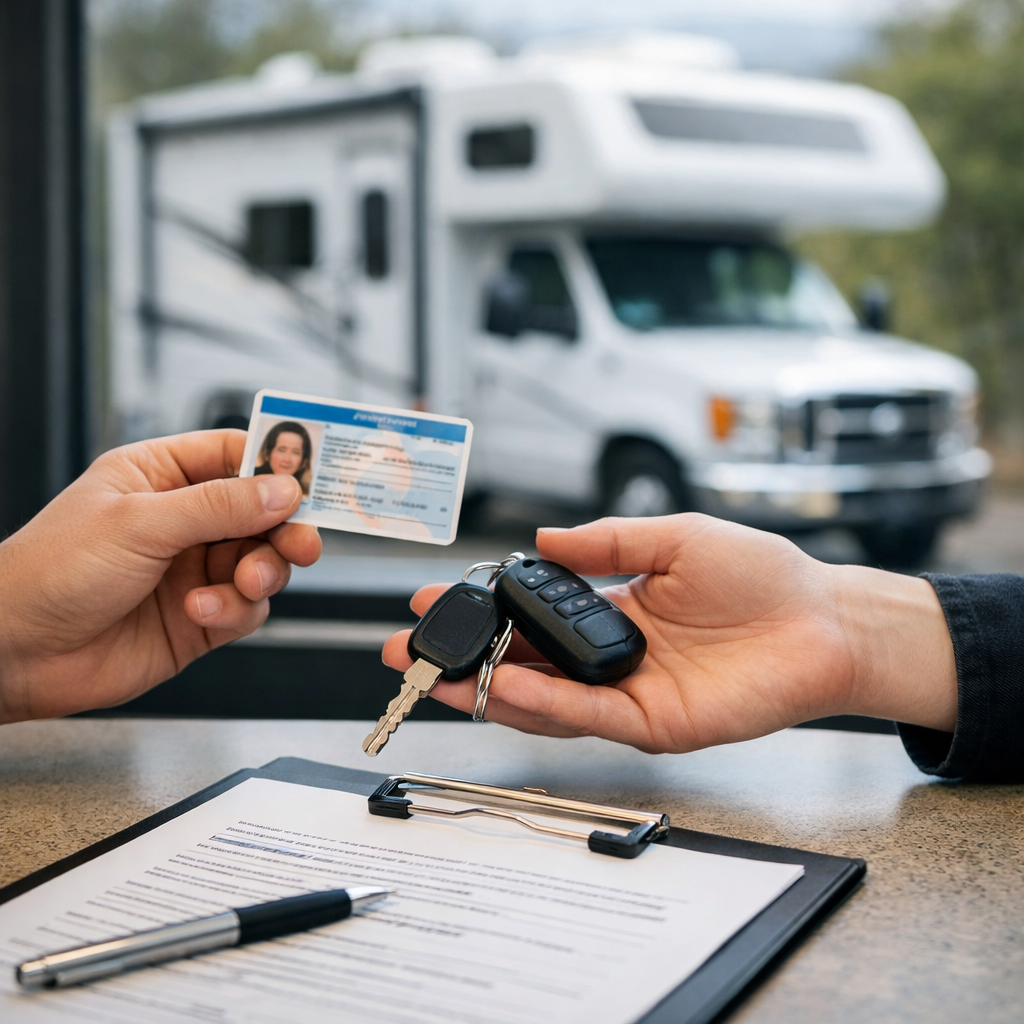
Do You Need a Special License to Rent an RV?
Renting an RV should feel exciting—not confusing. The short answer: most renters do not need a special license to drive common motorhomes or tow travel trailers. As rental experts at Beckley’s explain, “Most motorhomes can be driven with a standard driver’s license; special licenses apply only for very large rigs” (see Beckley’s RVs rental guidance). The key exceptions are tied to size and state rules: many states exempt RVs below 26,000 lbs gross vehicle weight rating (GVWR), but heavier rigs or those over about 45 feet can trigger non‑commercial endorsements or, rarely, a CDL depending on local law (see Progressive’s RV licensing overview and this state RV license requirements digest from Campanda). Use the steps below to verify your specific RV and avoid surprises at pickup. RV Critic keeps the process straightforward with clear checklists and plain‑language guidance.
Short answer and when exceptions apply
A standard driver’s license is sufficient for most RV rentals. Large Class A motorhomes and bus‑like coaches are the typical edge cases. Many states don’t require a special license under 26,000 lbs GVWR, but over that weight—or around 45 feet of length—some states require a non‑commercial Class A/B or other endorsement. Rules depend on the RV’s registration state and can vary by passenger capacity as well. RV Critic recommends confirming specs with the rental and the DMV before booking.
Sources: Beckley’s RVs rental guidance; Progressive’s RV licensing overview; Campanda’s state RV license requirements digest.
How license rules work for RV rentals
RV licensing requirements are state‑specific rules that determine which driver’s license class is needed to operate a recreational vehicle. They usually hinge on gross vehicle weight rating (GVWR), overall length, and passenger capacity. Some states exempt RVs below set thresholds; others require non‑commercial endorsements, and a few require a CDL for very large, bus‑like rigs.
What matters most is the state where the RV is registered (not necessarily where you live or travel), per Progressive’s RV licensing overview. Several states issue non‑commercial Class A/B licenses or endorsements when weight/length thresholds are exceeded—a pattern summarized in Campanda’s state RV license requirements digest. On top of state law, many rental companies add their own overlays—minimum age (often 25+), proof of a valid license, and a brief orientation—regardless of whether a special license is required (see Beckley’s RVs rental guidance). RV Critic’s step‑by‑step checks below help you confirm both state rules and rental policies before you book.
Weight, length, and passenger thresholds to know
- Standard license is typically fine under 26,000 lbs GVWR; special licensing may be triggered above 26,000 lbs or lengths over ~45 ft (varies by state).
- Passenger capacity can matter: vehicles designed to carry 16+ passengers can invoke bus-like licensing in some states.
- Always confirm the listing’s GVWR and length; don’t assume based on class name alone.
Typical class weights (GVWR) at a glance:
| RV class | Typical GVWR range | Notes for renters |
|---|---|---|
| Class B | ~6,000–8,000 lbs | Van-based, most beginner-friendly; unlikely to approach thresholds |
| Class C | ~10,000–12,000 lbs | Mid-size; most models remain under special-license triggers |
| Class A | ~13,000–30,000 lbs | Larger rigs can exceed 26,000 lbs; verify specs carefully |
Ranges summarized from Campanda’s state RV license requirements digest.
State rules and where to verify requirements
Because license requirements depend on the registration state, always check that state’s DMV or driver licensing division. Some states require non‑commercial licenses for large motorhomes at or above 26,000 lbs GVWR, and Texas, for example, may require a Class A or B based on combined or single-vehicle GVWR at/above 26,000 lbs (see the Escapees state-by-state guide). RV Critic treats the DMV page as the source of truth—save it for your records.
Quick ways to find the right page:
- Search: “[Registration State] DMV RV license” or “[State] non-commercial Class A/B”
- Look for sections titled “Driver license classes,” “Recreational vehicles,” or “CDL exemptions”
- If unclear, call the state’s driver licensing unit and ask about RV weight/length thresholds
What rental companies require beyond state law
Rental policies can be stricter than state rules, so plan ahead. Many companies require:
- A valid, unexpired driver’s license and minimum age (often 25+), plus an on‑site orientation
- A clean driving record and identity verification
- A security deposit and a major credit card
- Agreement to mileage, generator, and cleaning policies
Peer‑to‑peer platforms broaden vehicle variety and owner policies, which makes advance verification even more important (see Beckley’s RVs rental guidance for typical rental expectations). RV Critic suggests getting any exceptions or add‑ons confirmed in writing.
Easiest RV types to rent without special licensing
For most beginners, Class B camper vans and modest Class C motorhomes keep licensing simple and driving manageable. Travel trailers and pop‑up campers towed by a capable truck also typically don’t require a special license, provided you stay within weight and brake rules. Most rentals in these categories are fine with a standard license unless very large (as noted by Beckley’s RVs and Campanda). For first-time renters, see RV Critic’s beginner resources for picking an RV type and towing setup.
Towing considerations for rental trailers
GVWR (gross vehicle weight rating) is the maximum allowable total weight of a vehicle or trailer when fully loaded—cargo, fluids, passengers, and tongue weight included. Exceeding GVWR compromises braking, stability, and legal compliance. RV Critic’s guidance below breaks down these limits for first‑time renters.
Key towing checks:
- Verify your tow vehicle’s rated towing capacity and payload
- Match receiver hitch class to the trailer’s loaded weight; use heavy‑duty (10,000+ lb) hitches for larger rentals
- Confirm tongue weight (10–15% of trailer weight is typical) and that your hitch/ball mount is rated accordingly
- Use sway control/weight distribution when near limits; consider anti‑rattle accessories for stability and quieter towing
- Ensure trailer brakes are functional if required; many states mandate brakes above specific trailer weights
- Consider bumper‑mount options only when rated for the load
- Trailers generally don’t change driver licensing, but you must follow state towing, lighting, and brake laws—verify via the DMV
Insurance and liability checks before you book
Don’t assume your personal policy covers an RV rental. Many personal RV/auto policies exclude rentals; commercial or rental‑specific coverage is often required (see RentMy’s rental business guide). As a rough reference, basic RV insurance can run about $1,000–$1,500 per year; short‑term rental policies are often pricier on a per‑day basis. RV Critic recommends confirming coverage details with your insurer and the rental provider.
Confirm in writing:
- Who provides primary liability and physical damage coverage
- Deductibles for collision/comp, windshield, and glass
- Roadside assistance and tire/windshield coverage
- Whether additional drivers are covered and any age limits
- Whether coverage follows the vehicle, the driver, or both
Younger drivers and renter eligibility
Some companies require primary drivers to be 25 or older even if a special license isn’t needed (noted by Beckley’s RVs). If you’re 21–24, filter for listings that allow younger renters, choose smaller Class B/C or light travel trailers, and complete any offered training/orientation to strengthen approval. RV Critic also recommends messaging owners ahead of time to confirm eligibility.
Quick checklist to confirm you’re cleared to rent
Use this RV Critic checklist before you book.
- Capture the RV’s class, GVWR, length, and passenger capacity from the listing.
- Check the DMV for the state where the RV is registered for any special license rules.
- Confirm rental company requirements: age minimum, license class, training/orientation, route limits.
- Verify insurance: liability limits, deductibles, roadside, and all approved drivers.
- Add every driver to the reservation and bring licenses to pickup.
- Store screenshots of specs, DMV references, insurance proof, and rental emails in your reservation folder.
- Not sure about licensing? Choose a smaller RV to stay clearly below thresholds.
Budget planning tips for your upcoming trip
Build a full‑trip budget to avoid surprise costs:
- Nightly rental rate
- Mileage and generator fees
- Insurance and roadside assistance
- Campsite/resort fees and reservations
- Fuel and propane
- Cleaning, dump, and late-return fees
- Tolls, parking, and add‑ons (bike racks, linens, kitchen kits)
- Set a 10–15% contingency for incidentals and price swings
Market context: rental demand remained robust heading into 2024, with 41% of rental dealers expecting higher revenue versus 2023—pressure that can affect pricing and availability (see the RVDA rental demand report). RV Critic suggests tracking these items in a single budget so nothing gets missed.
When a special or commercial license may be required
Watch for these red flags:
- GVWR above 26,000 lbs (single vehicle or combined) or length over ~45 ft
- Passenger capacity of 16+ (bus-like configurations)
- States that require non‑commercial Class A/B endorsements or, in rare cases, a CDL for very large rigs
Example: Texas may require a non‑commercial Class A or B based on GVWR at/above 26,000 lbs, as outlined in the Escapees state-by-state guide.
How to check license rules before renting
Identify RV class and GVWR from the listing
Note whether it’s a Class A, B, C, or a trailer, and capture GVWR and length from the listing specs or the owner. Compare against typical ranges: Class B ~6,000–8,000 lbs, Class C ~10,000–12,000 lbs, Class A ~13,000–30,000 lbs (per Campanda). If GVWR nears 26,000 lbs or length ~45 ft, flag for special-license review.
Confirm state DMV rules for the vehicle’s registration state
Check the DMV of the registration state for non‑commercial license classes, RV exemptions, CDL thresholds, and passenger limits. Rules hinge on the vehicle’s registration state.
Ask the rental company about age, license class, and training
Get written confirmation of minimum age, acceptable license class, training/orientation, and any route/towing limits. Many companies allow standard licenses for most rentals but require 25+ and a clean record.
Verify insurance coverage and additional drivers
Confirm who provides primary liability/physical damage, deductibles, roadside, and that all drivers are named. Many personal policies won’t cover rentals; rental‑specific coverage is common (see RentMy’s rental business guide).
Document everything in your reservation
Save listing specs (GVWR/length), DMV references, certificates of insurance, and written confirmations in your reservation folder. Bring printed copies to speed pickup and resolve questions on site.
Frequently asked questions
Do I need a special license to rent a Class A, B, or C RV?
Usually no—a regular driver’s license works. For very large Class A rigs, state and weight rules may require more; see RV Critic’s quick checks below.
What GVWR triggers a special license in some states?
A 26,000 lb GVWR threshold is common; length over about 45 ft can also trigger rules, depending on the state. RV Critic recommends verifying with the DMV.
How can I confirm state rules for the RV I want to rent?
Check the DMV in the state where the RV is registered and ask the rental company to confirm requirements in writing. RV Critic suggests saving a screenshot of the DMV page.
Do rental companies allow drivers under 25?
Some do, but many set 25+ minimums. RV Critic’s tips can help you filter for age-friendly listings if you’re 21–24.
Will my standard auto policy cover an RV rental?
Often not. Verify whether the rental includes coverage or if you need a rental‑specific policy, and ensure all drivers are listed; RV Critic recommends confirming in writing.