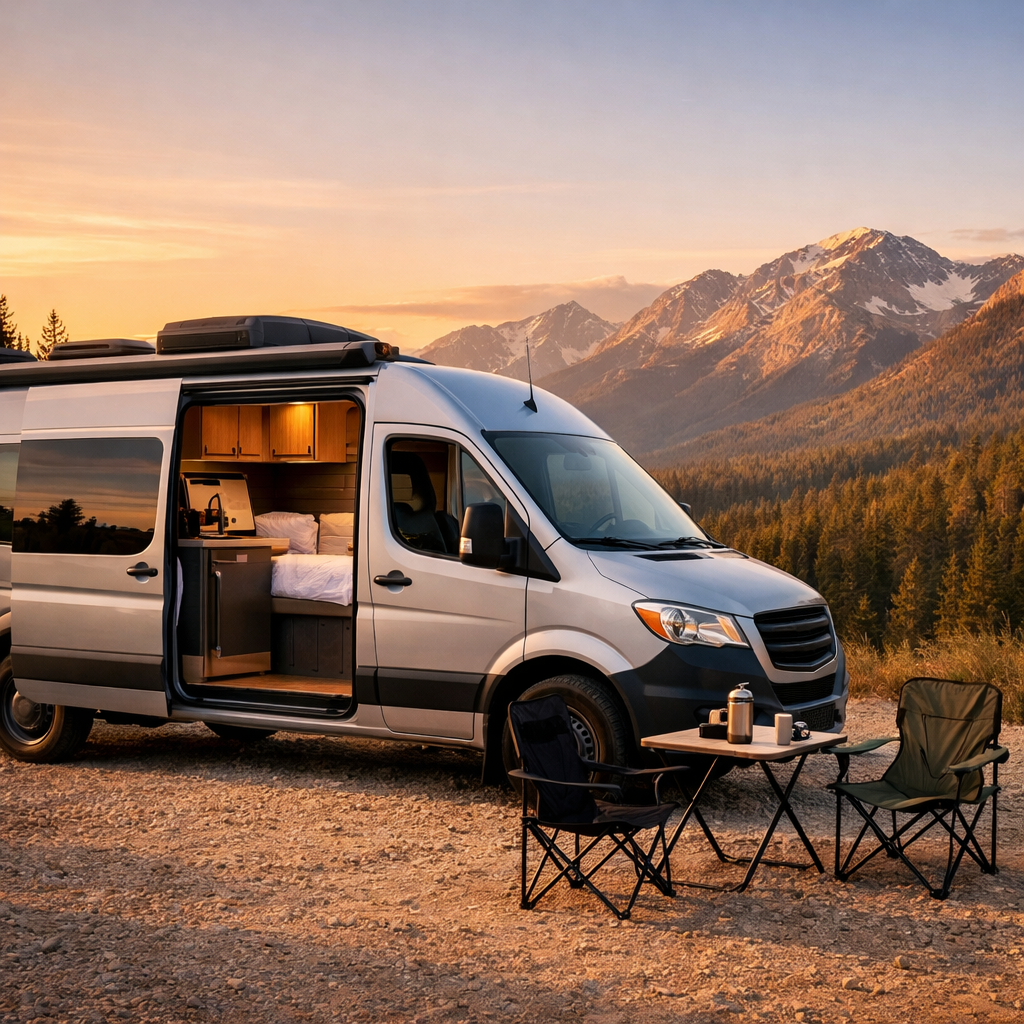
Class B Camper Vans: The Most Versatile RVs for Flexibility
If you want the best RV for flexible travel plans—spur‑of‑the‑moment weekends, city-to-trailhead detours, or a last‑minute festival—Class B camper vans are the sweet spot. Built on van chassis with car-like manners, they combine easy urban parking with self-sufficient systems for off-grid nights. Search interest is rising as buyers look for smaller, easier rigs, and large marketplaces report heavy traffic, signaling strong demand for Class B models (RV Trader averages about 6.5 million visitors monthly, per industry reporting on shifting buyer preferences). For travelers weighing motorhome vs. travel trailer, a Class B often delivers the most freedom with the least friction—no tow vehicle, no special routes, no campsite gymnastics. RV Critic compiles practical buyer checklists to help you choose a Class B that fits this travel style.
Why Class B vans fit flexible travel plans
Flexible travel means short-notice trips, mixed city-and-nature itineraries, and on-the-fly route changes without relying on campground hookups. Class B vans enable this with car-like maneuverability, efficient onboard systems, and minimal setup—so you can pivot from errands to overnights, or from urban parking to dispersed boondocking with ease.
Compact Class B motorhomes are easier to drive than larger RVs, slot into standard parking spaces, and need minimal setup—key ingredients for spontaneous travel. That’s why they’re increasingly favored for flexible itineraries, with industry sources tracking notable search momentum toward Class B models and strong marketplace activity that reflects the category’s growth in real-world demand (see industry coverage of shifting Class B buyer preferences and marketplace scale). RV Critic focuses on real-world use—parking, boondocking, and remote work—so you can plan flexible routes with confidence.
Class Bs also support a “daily driver RV” lifestyle: commute Tuesday, boondock Friday. Efficient power systems, compact tanks, and low profiles keep plans light and logistics simple—especially for urban parking, quick detours, and remote work on the move.
Cite: search trends show buyers shifting toward Class B motorhomes and major marketplace traffic; RV Critic tracks these shifts for buyers.
Class B search trends and marketplace scale
What defines a Class B camper van
Class B camper vans are motorhomes built on van chassis—commonly Mercedes‑Benz Sprinter, Ford Transit, or Ram ProMaster—typically 17–24 feet long. Most seat two to four and include compact kitchens, convertible beds, and space-efficient bathrooms, offering a true “all-in-one” rig without a tow vehicle or slides.
- Typical length: 17–24 ft
- Typical seating/sleeping: 2–4 people
Mini comparison for context:
| RV type | Typical length | Seating | Maneuverability (city) |
|---|---|---|---|
| Class B (van) | 17–24 ft | 2–4 | High—fits most standard spaces |
| Class C (cab-over) | 22–32 ft | 4–6 | Moderate—tight cores can be challenging |
Learn more in this concise primer on the Class B motorhome footprint and features.
Concise Class B camper vans guide
Core advantages for spontaneous trips
- Easy to drive and park: Most Class B vans fit in standard spots and navigate parking garages, trailheads, and city streets with far less stress than larger rigs.
- Low planning friction: No special routing for height/length, fewer campground restrictions, and quicker setup/tear-down make last-minute plans realistic.
- Urban-to-rural versatility: A single vehicle blends city errands, national park loops, and festivals, then tucks into smaller sites for the night.
Boondocking is camping without hookups for power, water, or sewer—often on public lands or in dispersed areas. Class B vans shine here with efficient power systems, modest tankage, and small footprints that fit more sites and trailhead parking while staying quiet and low-profile overnight.
These are the three factors RV Critic emphasizes for spontaneous travel.
Chassis choices and what they mean for you
Your chassis decision shapes service access, driving feel, interior volume, traction options, and total cost of ownership.
Key considerations:
- Service network and parts availability
- Interior volume and aisle width
- Drivetrain/traction (FWD, AWD, 4x4)
- Operating costs and maintenance
- Towing capacity and gearing
Use the RV Critic scorecard below to weigh these against how and where you travel.
Quick comparison:
| Chassis | Strengths | Consider if you… |
|---|---|---|
| Mercedes‑Benz Sprinter | Premium builds, 4x4 option, refined touring | Prioritize upscale touring and dirt-road reach; accept higher costs |
| Ford Transit | Broad service network, AWD, strong gas power | Want all-weather traction, towing confidence, and easy servicing |
| Ram ProMaster | FWD traction, low floor, tight turning, value | Need urban maneuverability, interior width, and lower ownership costs |
Sprinter strengths and tradeoffs
Premium touring rigs—including adventure-focused models like the Airstream Interstate 24X—ride on the Mercedes‑Benz Sprinter for its refined drive and available 4x4. Expect higher acquisition and maintenance costs, and note that some owners report harder-to-find service in remote regions. Sprinter 4x4 boosts dirt-road access, but it’s not a rock-crawling solution.
Reference: owner-reported service realities and premium-build context.
- Premium model context and off-grid package trends: Best and worst Class B RVs of 2026
- Owner service access discussions: Class B forum thread on choosing a van
Transit and AWD versatility
The Ford Transit balances power, traction, and service network depth. For example, Jayco’s Solstice uses a Transit AWD 350HD with the EcoBoost V6, a combo that fits mixed-weather touring and towing while keeping service simple across much of North America.
See recent model examples and platform notes.
The best Class B RVs for 2026: A complete guide
ProMaster value and urban maneuverability
Ram’s ProMaster wins on value, a low cargo floor, and a tight turning radius—great for city cores and garage access. You’ll see multiple 21‑foot builds with clever floorplans (Jayco’s Swift offers four distinct layouts in that length). Many buyers favor ProMaster-based vans like Winnebago’s Travato for lower cost of ownership.
Explore current model and layout variety.
The best Class B RVs for 2026: A complete guide
Interior flexibility that adapts to your life
Modular furniture and multi-use zones turn one van into a weekender, office, or gear hauler—often in the same day. Seek layouts that convert quickly and preserve open aisle space for gear. RV Critic favors layouts that convert fast and keep aisles clear.
Features to prioritize by use case:
- Couple touring: rear lounge-to-bed conversions; swivel cab seats; two-burner galley; quiet heat.
- Remote work: swivels with fold-down desk; lithium bank with inverter; 4G/5G signal booster; dimmable task lighting.
- Family day trips: pop-top for extra bunk; 2+2 seating; easy-clean surfaces; compact cassette toilet.
Convertible beds and lounge spaces
Quick transitions make late arrivals painless. Look for rear lounges that convert to beds, murphy-style fold-downs that free floor space, or dinettes that become a two-sleeper. Most Class B layouts seat and sleep 2–4 people—enough for a couple, plus an occasional guest or kid.
Swivel seats and pop tops
Swiveling captain’s chairs paired with a fold-down desk create a legitimate remote-work setup, letting you switch from drive mode to meeting mode in minutes. Pop-top roofs add standing headroom and a second bunk—ideal for families or friends joining for a weekend.
Reference: models highlighting swivel/desk setups and pop-top options.
The best Class B RVs for 2026: A complete guide
Gear storage for bikes and boards
Plan before you buy:
- Measure rear-door opening and aisle width for bikes.
- Add L-track for flexible tie-down points and modular shelves.
- Use under-bed “garage” zones for bins; mount roof racks for surfboards/SUPs.
- Common kits: 2 bikes + inflatable SUP; ski/snowboard bins; surfboard roof mounts.
Power systems for off-grid freedom without headaches
A van power system combines a battery bank (often lithium), solar panels, alternator charging, and an inverter to run 12V/120V appliances off-grid. The right mix determines how long you can boondock and how simple the system is to monitor, charge, and maintain day to day.
Factory “off-grid” packages are increasingly common on Class B models, but more capability can mean more complexity. RV Critic recommends prioritizing clear documentation and components designed to work together.
Trend and configuration caveats discussed here.
Best and worst Class B RVs of 2026
Lithium, solar and alternator charging basics
Many top vans now ship with lithium batteries, roof solar, and high-output alternator charging—think adventure builds like Winnebago Revel. These systems often blend 12V, 48V, and 120V components, so configuration matters.
Right-size in four steps:
- Estimate daily watt-hours (fridge, fans, laptops, cooking).
- Size battery in amp-hours and solar in watts to cover typical days.
- Confirm alternator charge rate for cloudy spells and driving days.
- Choose inverter size for peak loads (induction cooktop, espresso machine, A/C).
Keywords: MPPT controller, DC‑DC charger, inverter‑charger.
Heating and hot water options
Diesel heaters sip fuel from the main tank and work well at altitude; gasoline/propane heaters are common and simpler to service, with varying battery draws. Check water capacity and toilet type: for example, Thor’s Sanctuary 19A lists roughly 22 gal fresh, ~20 gal gray, and a small cassette for black.
A cassette toilet uses a compact, removable holding tank (often 3–6 gallons) instead of a fixed black tank. You carry the cassette to a dump station, restroom, or RV facility to empty. It saves space and simplifies winterizing, but it requires more frequent dumping.
Reference specs and features shown in a model walk-through.
Thor Sanctuary 19A tour and specifications
Safety and electrical best practices
- Label breakers, carry spare fuses, and use a quality surge protector.
- Keep a multimeter aboard and document system settings for quick diagnostics.
- Check battery health periodically; confirm thermal management and ventilation.
- With complex lithium/solar/alternator ecosystems, clear documentation prevents misconfiguration and long service hunts.
Real-world scenarios where Class B shines
Weekend couples and quick getaways
Minimal setup and standard-size parking compress planning time. A ProMaster-based value build keeps costs reasonable while delivering a quiet bed, quick galley, and a lounge that flips to sleep mode in minutes—perfect for late Friday arrivals.
See value-leaning chassis options and layouts.
Best and worst Class B RVs of 2026
Remote work on the road
Swivel chairs, fold-down desks, and a reliable lithium/solar/alternator combo support real workdays. Add a 4G/5G booster and you can park near a trailhead, finish a meeting, and start your hike—all with the drivability that digital nomads prize in Class B vans.
Model examples with work-friendly setups.
The best Class B RVs for 2026: A complete guide
National parks and city parking
Class Bs blend urban agility with rural independence: downtown lunch, an afternoon museum, then a quiet national park site without hunting for oversize parking. Some builds add A/T tires and a mild lift for rougher access roads, expanding campsite options further.
See a model showcasing tires/lift and compact capacities.
Thor Sanctuary 19A tour and specifications
Family day trips and kid-friendly add-ons
Pop-top bunks, portable induction cooktops, and flexible 2+2 seating keep family outings easy. Compact sanitation like a cassette toilet simplifies quick cleanups at the beach or trailhead without finding a dump station.
Costs, maintenance and ownership tradeoffs
Sprinter-based premium rigs often carry higher upfront and maintenance costs; ProMaster builds frequently deliver lower total cost of ownership. Service access matters too—some owners note Mercedes chassis service can be tougher in remote regions, whereas Ford and Ram networks are typically broad. RV Critic’s ownership checklists help you budget and map service stops before you buy.
Simple ownership cost view:
| Cost category | Typical frequency | Notes |
|---|---|---|
| Insurance | Annual | Rates vary by chassis/value and usage |
| Routine maintenance | Semiannual–annual | Oil, filters, inspections; chassis-specific intervals |
| Tires | 3–5 years (use-dependent) | Heavy loads and off-pavement shorten life |
| Winterization | Annual (cold climates) | Antifreeze, draining, seals; DIY or shop |
| Battery replacement | 8–15 years (lithium) | Depends on cycles, depth of discharge, heat |
Owner experience and service access context:
Forum discussion on van choice and service
How to choose the right Class B for your travel style
A five-step buyer flow from RV Critic:
- Define your route mix: city, national parks, dirt roads.
- Confirm people count and sleeping needs (2–4).
- Set off-grid duration goals (1–2 nights vs. 3–5+).
- Map service access where you’ll travel.
- Align budget with chassis, power, and build quality.
Must-haves checklist:
- Chassis/traction: FWD/AWD/4x4; turning radius for your city.
- Sleep: quick lounge-to-bed; pop-top if needed.
- Power: lithium size, alternator charge, inverter rating.
- Heat/hot water: diesel vs. propane; tank sizes; cassette vs. black tank.
- Storage: L-track, roof racks, under-bed garage.
Nice-to-haves:
- Induction cooktop; soft-start A/C
- Upgraded insulation; dimmable lighting
- Outdoor shower; rear screen doors
Prioritize chassis and service access
Match travel regions to dealer density. Transit offers broad service networks; ProMaster is widely supported and simpler to service; Sprinter can pose challenges in remote areas according to owner reports. Add AWD/4x4 if you face snow or dirt, and consider turning radius for tight urban routines.
Service considerations and owner perspectives:
Match systems to boondocking goals
- 1–2 nights: modest lithium (e.g., 200–300Ah), 200–300W solar, alternator charging.
- 3–5 nights: larger bank (400–600Ah), 300–600W solar, high-output alternator.
- Winter: robust heat, insulation, and cold-weather plumbing.
Manufacturers are standardizing solar/lithium/alternator packages on off-grid oriented rigs, simplifying choices.
Trend overview:
Class B off-grid package trends
Avoid over-customization for resale
Favor factory packages and modular storage over permanent cabinetry that fixes the layout. Keep modifications reversible, document all electrical settings and wiring, and preserve flexibility—your future buyer (and future you) will appreciate a multi-role, well-documented van.
Test before you buy and build confidence
Rent each chassis for a weekend to compare driving feel, cabin noise, and layout flow. Document what delighted you and what didn’t—then refine your must-have list before you sign. Bring the RV Critic scorecard below for side-by-side comparisons.
Rent and take a practice trip
Run a 48–72 hour loop that mirrors real use:
- City errands, tight parking, and a grocery stop.
- Highway stretch with crosswinds and hills.
- One boondock night to test power, tanks, and stealth.
- Evaluate setup time, cabin heat/noise, and work ergonomics.
Create a scorecard for must-haves
Use RV Critic’s 1–5 scale and quick notes:
| Criterion | Score (1–5) | Notes |
|---|---|---|
| Drivability (urban/highway) | ||
| Service access (where you travel) | ||
| Sleep comfort and transitions | ||
| Workspace ergonomics | ||
| Storage and gear hauling | ||
| Off-grid duration match | ||
| Noise/ride quality | ||
| Budget fit |
Inspect build quality and warranty coverage
Open every cabinet and hatch: check wiring routes and labeling, cabinet latches, sealant lines, and tank plumbing. Verify electrical diagrams and component manuals to avoid setup confusion later. Confirm both chassis and coach warranties, service locations, and response times before purchase.
Is a Class B the best RV for flexible travel plans
Yes. For most travelers chasing maximum flexibility, Class B vans offer the ideal blend of drivability, compact size, and self-sufficient systems. They’re built on proven van platforms (Sprinter, Transit, ProMaster), typically 17–24 feet long, and seat/sleep 2–4—perfect for spontaneous, mixed itineraries. Market outlooks project further growth and innovation, with the Class B segment expected to reach roughly $11.86B by 2033 at about 4.77% CAGR, underscoring continued momentum and choice. Match your chassis, power, and maintenance comfort to your routes, and you’ll unlock the most versatile RV lifestyle on the road.
Market outlook reference:
Class B motorhome market projections
Frequently asked questions
Do I need a special license to drive a Class B
No. In most regions a standard driver’s license is sufficient—RV Critic still recommends checking your local rules.
How easy is it to park and drive a Class B in cities
Generally very easy. The compact length fits standard spaces and the tight turning radius keeps urban errands low stress; RV Critic’s guides cover simple parking strategies.
How many people can a Class B sleep comfortably
Most seat and sleep 2–4 people, with lounge-to-bed layouts and optional pop-tops adding an extra bunk; RV Critic’s buyer guides break down common layouts.
Are Class B vans good for boondocking
Yes. Many include lithium batteries, solar, and alternator charging, enabling several off-grid days without hookups—RV Critic’s off-grid checklists can help you size a system.
What ongoing costs should I expect with a Class B
Plan for insurance, routine maintenance, tires, winterization if needed, and eventual battery replacement. RV Critic’s ownership checklists outline typical ranges and service considerations.
Looking for more practical RV guidance? Visit RV Critic for hands-on reviews and checklists.