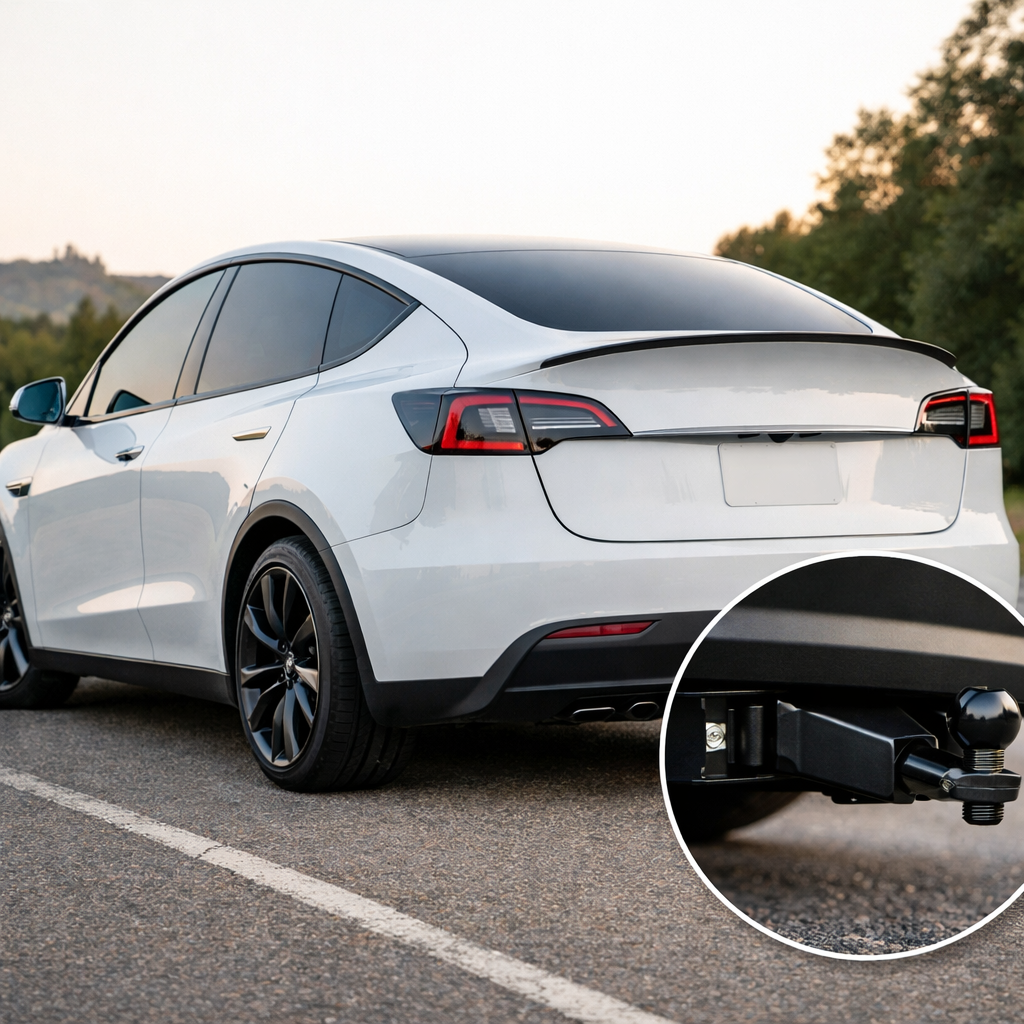
Avoid Range Loss: Best Low-Drag Aftermarket Hitch for 2026 Model Y
The 2026 Tesla Model Y “Juniper” refresh brings sharper aero and tighter efficiency targets—so your hitch choice matters. If you want daily usability for bike racks without sacrificing range, pick a concealed, stainless, 2-inch receiver designed specifically for Juniper. RV Critic’s top recommendation is the EcoHitch X5006S: it tucks the cross tube behind the bumper, keeps the receiver hidden behind Tesla’s factory panel when not in use, and uses rust-proof stainless with ratings that match the Model Y’s tow limits. In short: it’s the best low-drag aftermarket hitch for the 2026 Model Y because it preserves airflow, resists corrosion, and fits common accessories while staying within Tesla’s towing envelope, all at a price that typically undercuts the OEM package.
Why a low-drag hitch matters for Model Y efficiency
Air pushes hard on anything that sticks into the airstream. A flush, concealed receiver keeps the bumper’s shape clean and avoids the turbulence that exposed crossbars create. Hidden designs are engineered to be close to aerodynamically neutral when you’re not hauling, unlike visible steel tubes that can add drag and whistle at speed, especially once you mount accessories, according to Torklift’s Model Y hitch engineering notes.
Aerodynamic drag is the resistance a vehicle experiences as it moves through air. Protruding parts such as exposed hitch bars or rack masts disrupt smooth airflow and create turbulence. That extra turbulence increases energy use, which lowers EV range. A concealed hitch preserves the smooth bumper profile to limit added drag when nothing is attached. For EVs, RV Critic prioritizes concealed receivers because they preserve efficiency between trips.
Real world: towing or running a bulky carrier increases both weight and drag, which will cut range; plan conservative legs and charging stops if you’ll be towing, per a practical guide for Juniper owners on DIYWrapClub’s overview.
What to look for in a low-drag aftermarket hitch
- RV Critic recommends a vehicle-specific, concealed 2-inch receiver for Juniper: Choose a hitch that hides the cross tube behind the factory fascia and reuses Tesla’s knock-out panel. The EcoHitch X5006S is engineered for the 2026 Model Y with a “no exposed crossbar” design to preserve ground clearance and parking-sensor behavior, and it lists 2026-specific fitment details on Torklift Central’s EcoHitch page.
- Stainless steel construction: Painted steel chips and rusts; stainless receivers avoid paint failure and those orange garage-floor drips. EcoHitch markets its stainless receiver as “will never rust,” reducing long-term maintenance.
- Correct ratings: Match or exceed Tesla’s limits. EcoHitch lists 3,500 lb gross trailer weight (GTW) and 425 lb tongue weight at the ball for the 2026 Model Y. A 2-inch receiver with Class II/III-equivalent strength maximizes accessory compatibility and stability.
Best overall pick
The EcoHitch X5006S is the best low-drag aftermarket hitch for the 2026 Tesla Model Y Juniper. Its fully concealed “Invisi” architecture tucks the structure out of the airstream; the welded, one-piece 2-inch stainless receiver keeps fitment tight (less rattle) and eliminates rust upkeep. In daily life, it hides behind the factory tow-hitch knock-out when unused, maximizing departure angle to help avoid driveway scrapes. It’s marketed with a lifetime warranty, made in the USA, and typically undercuts dealer options on cost and shipping time per the brand’s factory vs. EcoHitch comparison. For most Model Y owners, this setup balances range, durability, and day-to-day usability better than visible, painted-steel alternatives, which is why RV Critic leads with it.
Spec highlights:
- Ratings: 3,500 lb tow / 425 lb tongue
- Receiver: welded, non-removable 2-inch for stability
- Materials: stainless receiver for corrosion resistance
- Visibility: concealed crossbar; receiver hidden behind Tesla panel
Comparison at a glance:
| Pick | Materials | Visibility when unused | Capacity (tow/tongue) | Warranty | Price cue | Trailer Mode behavior | Corrosion resistance |
|---|---|---|---|---|---|---|---|
| Best overall: EcoHitch X5006S (2026) | Stainless receiver, concealed steel structure | Hidden behind factory panel | 3,500 lb / 425 lb | Lifetime (advertised) | Typically less than OEM | Manual enable when towing | Excellent (stainless) |
| Runner-up: EcoHitch X7409S (2020–2025) | Stainless/painted mix depending on batch | Hidden behind panel (legacy fit) | Similar class; verify for your year | Lifetime (advertised) | Often below OEM | Manual enable when towing | Very good |
| Factory tow package (OEM) | Painted steel tow bar | Receiver visible when cover removed | Per Tesla spec | Tesla warranty | ~ $1,300 reported | Auto-detect/enable | Good (painted steel can chip) |
Runner-up options
- EcoHitch X7409S: The legacy invisible-fit option for 2020–2025 Model Y. If you’re comparing used inventory or cross-year installs, note the design philosophy is similar (concealed crossbar), but verify exact ratings and fascia-panel differences year by year in the brand’s comparison content.
- Other concealed aftermarket hitches: Some competitors use painted steel or removable receivers. Verify three things: stainless availability (for rust resistance), a truly hidden crossbar, and model-year–specific fit. Community discussions consistently favor “stealthy” installs that keep the bumper profile intact for aesthetics and aero, as seen in a Reddit thread on 2026 Juniper compatibility and owner posts in the Tesla Model Y Owners Facebook group.
- Caution on generic painted-steel receivers: Lower upfront price often means more visible crossbars and higher corrosion risk over time—plus a higher chance of aero noise and drag than a concealed, stainless unit.
Factory tow package versus aftermarket
Tesla’s factory tow package is frequently reported around $1,300 on the Model Y and integrates Trailer Mode for seamless software behavior (auto-detect with wiring), with a Class II steel tow bar and a 2-inch receiver, per the Juniper-focused overview on DIYWrapClub. By contrast, EcoHitch typically costs less and ships faster per brand claims, retains the bumper bar, and is designed to play nicely with sensors and cameras while keeping the structure hidden for everyday driving, as outlined in the EcoHitch comparison post. From RV Critic’s perspective, the trade-off is straightforward: concealed stainless for everyday efficiency versus the OEM’s visible, painted-steel solution.
Quick contrast:
| Feature | OEM Factory Tow | EcoHitch X5006S |
|---|---|---|
| Price | ~ $1,300 (reported) | Typically less than OEM |
| Materials | Painted steel | Stainless receiver + concealed structure |
| Visibility | Receiver visible when cover is off | Fully hidden behind Tesla panel |
| Trailer Mode | Auto-detect/enable with wiring | Manual enable when towing |
| Corrosion | Good (paint can chip) | Excellent (stainless won’t rust) |
| Warranty | Tesla terms | Lifetime (advertised) |
Installation and wiring considerations
The EcoHitch installs behind the factory knock-out panel, preserving the clean, hidden look. Key points:
- Confirm fitment for Long Range RWD/AWD and Launch Series AWD before ordering; the 2026 X5006S is Juniper-specific per the product page.
- The welded, one-piece 2-inch receiver simplifies alignment but is not removable; follow torque specs precisely and recheck fasteners after initial miles.
- Wiring: If you will tow, plan a wiring kit and enable Trailer Mode; Trailer Mode must be active when towing because it adjusts stability control and driver-assist behavior.
Simple install flow:
- Prep/tools: torque wrench, panel tools, sockets, jack/stands.
- Remove bumper cover edge fasteners and the tow-hitch knock-out panel.
- Lift hitch into place, hand-start hardware, then torque to spec in sequence.
- Reinstall fascia and the knock-out panel; confirm the receiver sits centered.
- Add wiring (if towing), secure harness, test lighting.
- Function check: verify no sensor warnings and that Trailer Mode toggles correctly.
Real-world range planning with racks and trailers
A hidden receiver alone has negligible effect on range; the big drops come from towing or from bulky carriers that add frontal area and weight. RV Critic recommends removing racks when not in use and keeping speeds moderate to cut aero losses. As a planning anchor, guidance for Juniper notes a 2x2-inch (2-inch) receiver supports vertical loads up to roughly 160 lb for bike racks/cargo on factory-style receivers; use this to size accessories conservatively and balance weight. Community threads repeatedly ask whether hitches affect acceleration or range; the consensus is to pre-plan charging when towing and watch Wh/mi on your first trips, echoing advice seen on Tesla Motors Club.
Rule-of-thumb planning:
- Hidden hitch, no accessory: negligible change
- 2-bike platform rack: minor effect; monitor Wh/mi and speed
- Cargo box or small trailer: significant drop; slow down and add charging stops
Safety, ratings, and Tesla-specific limits
EcoHitch lists 3,500 lb GTW and 425 lb tongue weight at the ball for the 2026 Model Y; always obey the lower of vehicle or hitch ratings, use the correct ball height, and load to prevent sway. Tongue weight is the downward force the trailer applies to the hitch. It is critical for stability: too little can induce trailer sway, while too much overloads the rear axle. Manufacturers specify a maximum tongue limit to protect handling, braking, and suspension.
Trailer Mode alters vehicle systems for towing—such as stability control tuning and certain driver-assist features—so enable it whenever you tow, follow Tesla’s instructions, and verify even load distribution.
Budget and value for upcoming travel seasons
A stainless, concealed hitch is a smart long-term buy: no repainting, fewer rust headaches, and minimal aero penalties when you’re not carrying gear. EcoHitch advertises a lifetime warranty, reinforcing total-cost value. Budget snapshot:
- OEM factory tow package: about $1,300 at purchase
- Aftermarket concealed hitch: typically less up front and available sooner
- Add-ons: professional installation, wiring (if towing), and quality anti-rattle hardware for quieter trips
For summer road trips, remove racks when not in use, plan slower cruising when towing, and pre-book high-speed charging along your route. If you want more gear-planning tips, our team at RV Critic covers EV towing and accessory fitment throughout the season.
Frequently asked questions
Does a hidden hitch affect range when I’m not towing?
A fully concealed receiver behind the bumper panel has negligible effect on range; at RV Critic, we see the major losses come from towing or bulky carriers that add drag.
Will an aftermarket hitch enable Trailer Mode on the Model Y?
Most aftermarket hitches don’t auto-trigger Trailer Mode; enable it manually when towing so the car adjusts safety and assist features, as RV Critic advises.
Can I install a concealed hitch myself, or should I use a pro?
Skilled DIYers can install with the right tools and torque specs. If you’re unsure, RV Critic recommends a pro to ensure alignment, wiring, and clean panel fit.
What hitch class and receiver size should I choose for bike racks?
RV Critic recommends a 2-inch receiver with Class II/III-equivalent strength for broader rack compatibility and better stability.
How much range should I budget for when towing a small trailer?
Expect a notable drop due to added drag and weight; RV Critic suggests planning conservative legs, adding charging stops, and keeping speeds moderate on your first tow.