2026 Heavy-Duty RV Receiver Hitches for 10,000+ Lb Loads
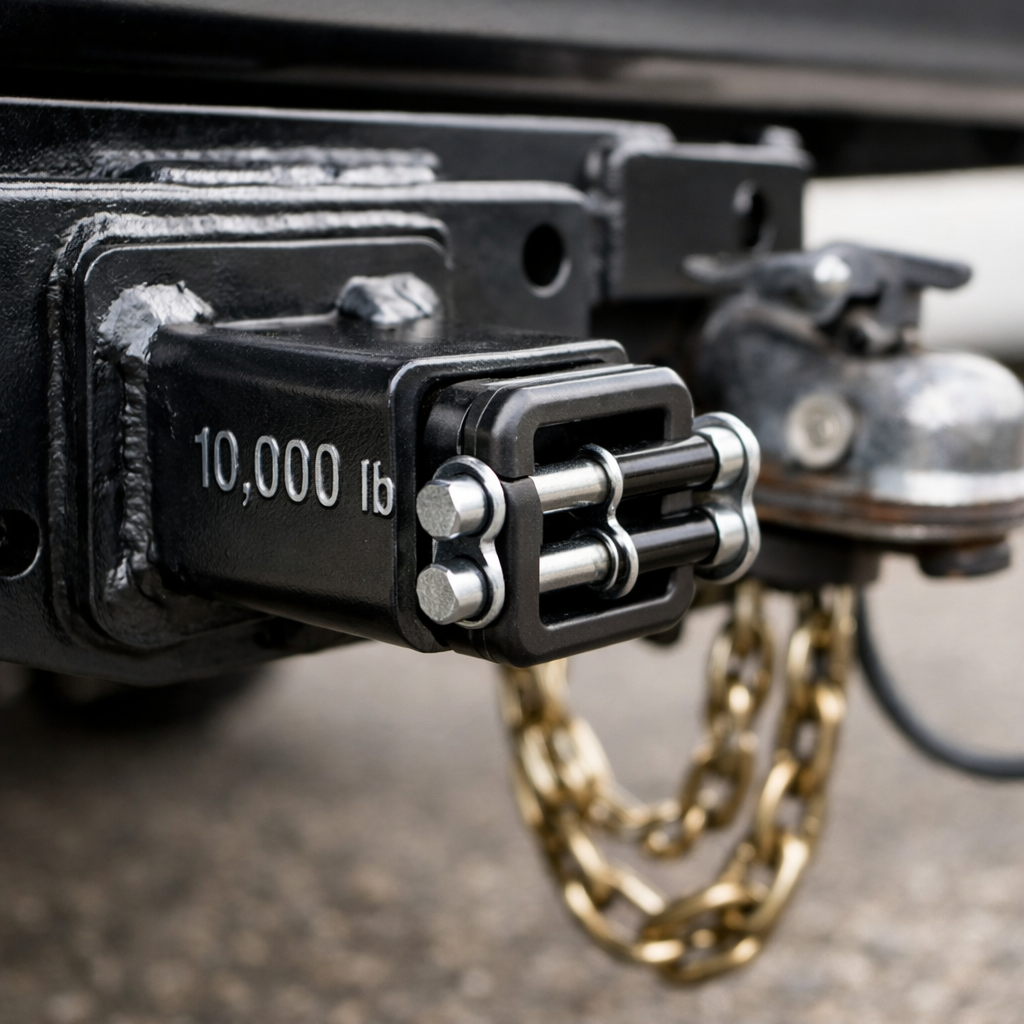
If you’re towing a large travel trailer or heavy cargo in 2026, the best RV receiver hitches for 10,000+ lb loads are Class IV–V units paired with the right weight distribution and sway control. Below, RV Critic cuts through the noise with vetted picks, a plain-English hitch selection guide, and the serviceability features that keep rigs quiet, level, and safe on real roads. We also explain when to step up to a 2.5-inch receiver, how to size tongue weight correctly, and the safety margins smart towers build into every trip.
RV Critic’s top picks overview
Here are the heavy-duty receiver and weight-distribution systems we trust for 10,000 lb+ bumper-pull towing. Ratings reflect manufacturer specs where available and common configurations; always verify the exact rating on your part number.
- Reese Towpower Class V Receiver: A straightforward Class V receiver rated around 10,000 lb GTW in consumer roundups; a solid baseline upgrade for HD pickups, especially when paired with a high-capacity ball mount (as summarized in this Garvee hitch roundup). Garvee hitch roundup
- Vehicle-specific Class V 2.5-inch Receiver (various makes): Stiffer 2.5-inch receivers commonly carry 15,000–17,000 lb ratings and reduce play with heavy shanks; best for long, tall trailers or frequent mountain towing.
- MaxxHaul 50027 Heavy-Duty Ball Mount: A robust hitch mount cited up to 14,500 lb GTW; pairs with Class IV/V receivers to unlock full capacity of strong tow vehicles. See GTW example in the same Garvee roundup above.
- Equal-i-zer 4-Point Sway Control WD Hitch: Integrated 4-point sway control that resists sway from the start and redistributes load across axles; commonly available in 10k/12k/14k kits with matched TW bars. Consumer hitch guide
- Blue Ox SwayPro WD Hitch: Popular round-bar WD system with grease ports on trunnions for quieter operation and simpler upkeep; multiple bar ratings cover 10k–15k ranges.
- Vaver 10,000 lb WD Kit (pre-installed ball/shank): A value-focused 10k kit reported around 87.1 lb total package weight—good for entry into WD with fewer add-ons. Setup and towing tips video
- Vivore 12,000–14,000 lb WD Kit: Budget-minded 12k–14k options, roughly 83.8 lb with chrome ball; useful stepping stone before moving to premium sway systems.
Quick spec table (typical configurations)
| Product | Hitch class / receiver size | GTW rating | Tongue weight rating | Sway control | Grease zerks | Approx. weight | Best for |
|---|---|---|---|---|---|---|---|
| Reese Towpower Class V Receiver | Class V / 2"–2.5" | ~10,000 lb (model-dependent) | ~1,000 lb | None (receiver only) | N/A | ~40–60 lb | HD pickups needing a basic Class V receiver |
| Vehicle-specific Class V 2.5" Receiver | Class V / 2.5" | 15,000–17,000 lb (typical) | 1,500–1,700 lb | None (receiver only) | N/A | ~50–70 lb | Long/heavy trailers, frequent towing |
| MaxxHaul 50027 Ball Mount | N/A (fits 2" receivers) | Up to 14,500 lb | ~1,450 lb | None | N/A | ~20–30 lb | Heavy-duty ball mount for strong receivers |
| Equal-i-zer 4-Point WD Hitch (14k kit) | WD system for 2" shank | 14,000 lb | 1,400 lb | Integrated 4-point | Friction surfaces; no zerks | ~90 lb | Large travel trailers in wind/traffic |
| Blue Ox SwayPro (12k–15k kits) | WD system for 2"–2.5" shanks | 12,000–15,000 lb | 1,200–1,500 lb | Spring-bar geometry | Yes (on trunnions) | ~85–95 lb | Quieter WD with service-friendly design |
| Vaver 10k WD Kit | WD system for 2" shank | 10,000 lb | 1,000 lb | Add-on or basic sway | Varies | ~87 lb | Value WD for mid-heavy travel trailers |
| Vivore 12k–14k WD Kit | WD system for 2" shank | 12,000–14,000 lb | 1,200–1,400 lb | Add-on/basic sway | Varies | ~84 lb | Budget path to higher-capacity WD |
How to choose a 10,000+ lb receiver hitch
Follow this four-step decision flow to match your trailer, tow vehicle, and driving conditions:
- Confirm loaded trailer weight and tongue weight
- Choose hitch class/receiver size that exceeds those ratings
- Decide on weight distribution plus sway control for stability
- Prioritize serviceability (grease zerks, replaceable wear parts)
RV Critic prioritizes measured weights and component labels over brochure tow ratings to ensure a true margin of safety.
Market context: receiver hitches are projected to represent over 53.5% of the vehicle trailer hitch market by 2035, with total market value reaching about USD 37.65B at a 6.6% CAGR from 2026–2035, underscoring ongoing innovation and demand for heavy-duty towing gear. Research Nester market outlook
GTW vs tongue weight (40–50 words):
GTW is the trailer’s actual loaded weight measured on a certified scale. Tongue weight (TW) is the downward force the trailer applies to the hitch — typically 10%–15% for conventional travel trailers. Select receivers and hitch components that exceed both your measured GTW and TW to maintain safe control.
Hitch classes and receiver sizes for heavy towing
Use this matrix to simplify heavy-duty bumper-pull selection:
| Hitch class | Typical receiver size | Typical GTW range (WC/WD) | Notes |
|---|---|---|---|
| Class IV | 2-inch | 8,000–10,000 lb (WD often higher) | Good for many 10k travel trailers with WD |
| Class V (HD 2-inch) | 2-inch heavy-wall | 10,000–16,000 lb (varies) | Stronger 2" hardware; check shank rating |
| Class V | 2.5-inch | 12,000–17,000 lb (varies) | Stiffer interface for big loads and tall trailers |
| Gooseneck (reference) | Bed-mounted | Consumer listings around 18,000 lb | Alternative for very heavy cargo noted in retail listings in roundups like Garvee |
Receiver size (40–50 words):
Receiver size is the internal dimension of the hitch opening that accepts a ball mount or weight‑distribution shank. Heavy-duty pickups often use 2.5-inch receivers for higher capacities and less play. Always match shank size or use rated sleeves; never force mismatched parts to fit.
Weight distribution and sway control for large travel trailers
At 10,000+ lbs, WD and sway control are not optional luxuries—they stabilize steering and braking near max capacity and reduce driver fatigue in wind and traffic. Instructional testing consistently shows WD hitches improve control and stopping consistency when set up correctly. Practical setup and towing tips
Equal-i-zer’s 4-point design actively resists sway from the start and redistributes tongue load across axles to help keep the tow vehicle level, improving comfort and confidence on uneven highways. Guidance from consumer hitch reviews highlights these dual benefits in real use. Integrated 4-point sway example RV Critic typically recommends integrated 4-point sway first for heavy travel trailers, with add-on bars as a secondary option.
Compare your options:
- Integrated 4-point sway control (friction points on trunnions) vs add-on sway bars that intervene after sway begins
- Multi-hole adjustable shanks for precise ride height vs fixed shanks that limit leveling range
- Kits with pre-installed balls/shanks (some ship with a 3-inch drop/7-inch rise) vs piecemeal components that add cost and setup time
Serviceability and durability features that matter
Heavy-duty use amplifies wear, so look for features that cut noise and maintenance:
- Grease zerks on trunnions or pivot points to reduce friction and chatter
- Replaceable bushings, pins, and spring bars to extend service life
- Corrosion-resistant coatings (e.g., e-coat + powder) for winter road salts
- Clear torque markings and accessible hardware for accurate, repeatable setup
Consumer guides frequently highlight integrated lubrication ports and serviceable parts as quieter and longer-lasting under load—key advantages for high-mileage towers. Example of service-friendly WD features The durability challenge in heavy-duty applications is industry-wide, pushing manufacturers toward more robust materials and modular, replaceable components. Industry market drivers RV Critic prioritizes designs with easy lubrication and replaceable wear parts to minimize downtime across long-haul use.
Installation and fitment checks by tow vehicle and RV type
A precise fit reduces clunks, wear, and sway:
- Confirm receiver class and size on the truck (2-inch vs 2.5-inch); verify its GTW/TW label
- Match the WD shank size and needed drop/rise to the trailer’s coupler height
- Check frame, bumper, tailgate, and spare-tire clearances through full articulation
- Verify brake controller operation, chain lengths, and 7-way wiring reach
Some WD kits advertise broad compatibility across RV, cargo, utility, horse, and ATV trailers. Treat “universal” as a starting point—always confirm coupler height and both GTW and TW margins before towing. Re-torque all hardware after the first 50–100 miles and at regular intervals. Hands-on setup reminders
Safety margins, ratings, and real-world load planning
- Rule of thumb: keep a 10%–20% safety margin between your loaded trailer weight and your hitch/receiver rating, and plan tongue weight at 10%–15% for bumper-pull trailers.
- Weigh in: measure GTW on a certified scale with the RV trip-loaded; verify TW with a scale or jack-based measurement. Confirm ratings across the chain—receiver, ball mount, ball, WD bars, and coupler.
- WD systems are especially helpful as you approach capacity, improving control and reducing porpoising when properly adjusted.
Safety and compliance scrutiny is rising, and dealers are strengthening risk programs—owners should keep documentation of ratings, inspections, and torque checks to reduce liability and streamline service. RV Pro industry analysis
Pricing, warranties, and total cost of ownership
- Pricing tiers: value 10k–12k WD kits (often with pre-installed ball/shank) cost less upfront, while premium 4-point sway systems command more but deliver quieter, more stable towing. For heavier loads, Class V/2.5-inch receivers and even gooseneck-style solutions appear in consumer listings up to roughly 18,000 lb GTW in retail roundups like Garvee.
- Lifetime value: grease ports, replaceable wear parts, and quieter operation reduce part replacement and downtime, keeping total ownership costs in check over thousands of miles. See consumer-focused discussions of maintenance-friendly designs for examples. Service-life benefits noted
- Industry context: with material and component costs under pressure, lean on strong warranties and established brands to hedge risk. RV Pro outlook RV Critic weighs long-term stability and serviceability over lowest upfront price for frequent towers.
RV Critic recommended use cases by hitch type
- 10,000–12,000 lb travel trailer in mixed crosswinds: Class IV/V receiver plus WD with integrated sway (e.g., 4-point designs such as Equal-i-zer).
- 12,000–14,500 lb long trailers: Class V receiver with high-capacity WD; consider a 2.5-inch receiver for added stiffness and reduced play.
- 15,000+ lb heavy cargo or commercial loads: Evaluate Class V with 2.5-inch receivers or gooseneck alternatives cited around 18,000 lb GTW in retail listings.
- Budget-minded buyers: Value kits like Vaver (10,000 lb, ~87.1 lb) and Vivore (12,000–14,000 lb, ~83.8 lb with chrome ball) can bridge the gap before stepping into premium 4-point sway systems, per examples in consumer guides and setup videos.
For deeper hitch and towing guides, visit RV Critic’s latest resources at RV Critic.
Frequently asked questions
What hitch class and receiver size do I need for 10,000+ lb towing?
Most 10,000+ lb bumper-pull setups use Class IV or Class V receivers, with Class V often using a 2.5-inch opening for higher capacity and less play; RV Critic recommends verifying GTW/TW labels and matching your ball mount or WD shank to that receiver size.
Do I need weight distribution and sway control for a heavy travel trailer?
Yes. WD and integrated sway control improve braking, steering, and stability at higher weights; RV Critic favors 4-point sway systems that resist sway from the start and help keep the rig level.
How much tongue weight should I plan for and verify?
Plan for 10%–15% of your loaded trailer weight as tongue weight for bumper-pull travel trailers. RV Critic advises choosing hitch, receiver, ball mount, and WD components that exceed your measured TW.
Can my half-ton or three-quarter-ton truck safely tow 10,000+ lbs?
Many 3/4-ton trucks are better suited for consistent 10,000+ lb towing, while some half-tons can reach it; RV Critic recommends confirming payload, receiver class, and GCWR on your specific build before committing.
How often should I inspect and service a heavy-duty receiver hitch?
Inspect before each trip and perform a detailed check every 3,000–5,000 miles. RV Critic recommends re‑torquing after 50–100 miles, lubricating at grease zerks, and replacing worn bushings or pins promptly.